What the anion gap Measures
The anion gap is a calculated value that helps clinicians evaluate a basic electrolyte panel and recognize whether an acid-base disorder may Additional reading be present. It is derived from the major measured electrolytes in serum, most commonly sodium, chloride, and serum bicarbonate, with some formulas also including serum potassium. In practical terms, the anion gap represents the difference between measured cations and measured anions in serum chemistry, offering a window into unmeasured anions and potential hidden acids.
Because the body maintains electrical neutrality, a gap exists between the ions that are routinely measured and the full set of circulating ions. That difference is the anion gap. When it rises, it often indicates the presence of unmeasured acids in the blood, which is why it has strong diagnostic utility in detecting high anion gap metabolic acidosis. When it is normal, it may still be clinically important, especially if corrected bicarbonate indicates a mixed disturbance or a masked disorder.
Standard calculation focuses on the difference between serum sodium and the sum of serum chloride and bicarbonate. A simplified view is:
Anion gap = serum sodium − (serum chloride + serum bicarbonate)
Some clinicians use a formula that also includes serum potassium, but most modern references rely on sodium, chloride, and bicarbonate because potassium contributes relatively little. The exact reference range depends on the laboratory method and instrument, which is why the value should always be interpreted using the local reference interval. In other words, the number matters, but the clinical setting matters just as much.
How to Use an Anion Gap Calculator
An anion gap calculator is a medical calculator that performs the formula and reduces arithmetic mistakes during laboratory analysis. To calculate anion gap, enter the measured values for serum sodium, serum chloride, and serum bicarbonate. Some calculators also allow input of serum potassium and albumin so the output can be adjusted for protein-related shifts.
The calculator is most useful when you are evaluating acid-base interpretation alongside a patient’s symptoms, medication list, and other laboratory values. A low bicarbonate alone does not tell you whether the issue is a primary metabolic process, a respiratory process, or a combination of both. That is where corrected bicarbonate and the anion gap work together.
A practical workflow looks as follows:
- Check the electrolyte panel and confirm the values for sodium, chloride, and bicarbonate. Input the values into the anion gap calculator. Determine whether albumin is low and use albumin correction if needed. Interpret the result in the setting of clinical assessment and symptoms. Contrast the result with the expected reference range and the patient’s acid-base status.
Because laboratory values can change with hydration status, sample handling, and assay differences, the calculator should be seen as an aid to interpretation, not a stand-alone diagnosis. It is especially useful when evaluating metabolic derangement or looking for a hidden anion deficit that may not be obvious from bicarbonate alone.
Adjusted Bicarbonate: Why It’s Important
Corrected bicarbonate helps separate a primary metabolic process from adaptation or a combined disorder. In acid-base disorder evaluation, a decreased measured bicarbonate can occur because of metabolic acidosis, but it can also be seen when the body is compensating for respiratory alkalosis. Without adjustment, the bicarbonate value may appear deceptively abnormal.
This is why corrected bicarbonate is so helpful in the setting of a shifting pH. If the measured bicarbonate is low, the clinician should ask whether the reduction reflects genuine bicarbonate depletion, neutralization of acid, or compensation for a respiratory problem. The corrected bicarbonate formula helps place the result in context by calculating what bicarbonate would be after accounting for the acid-base state and, when appropriate, albumin status.
The term is often used alongside the anion gap because both values help clarify the underlying process. A patient with metabolic acidosis may have a decreased bicarbonate and a elevated anion gap, but a patient with respiratory alkalosis may also have a reduced bicarbonate due to renal compensation. That distinction changes management, so corrected bicarbonate has direct clinical value.
In simple terms, corrected bicarbonate improves acid-base interpretation by addressing a key question: is the low bicarbonate part of a true metabolic acid load, or is it part of a counterbalancing pattern? When paired with the anion gap, it helps identify whether the disturbance is likely a high anion gap metabolic acidosis, a normal anion gap acidosis, or a mixed disorder.
Step-by-Step Worked Example
A helpful calculation example opens with carefully listed lab values. Suppose a patient has the following results:
- Serum sodium: 140 Chloride level: 104 Serum bicarbonate: 16 Albumin level: reduced
Using the standard formula, the uncorrected anion gap is:
140 − (104 + 16) = 20
This is above many laboratories’ normal normal range, which suggests a possible high gap process. But, if the patient has decreased albumin, the anion gap may be spuriously lower than expected because albumin is a major unmeasured anion. When that happens, albumin adjustment should be applied to estimate the more accurate adjusted anion gap.
A typical strategy adjusts the gap upward when albumin is low. The exact correction method depends on the source and the lab’s preferred method, but the main principle is unchanged: lower albumin reduces the apparent gap, so correction may reveal hidden hidden anions. If corrected bicarbonate is also low, the combination strengthens the concern for a true metabolic process rather than simple compensation.
Consider a second example with possible mixed acid-base physiology. A patient has:
- Serum sodium: 138 Serum chloride: 110 HCO3: 18 Serum albumin: within normal limits
The gap equals 138 − (110 + 18) = 10, which may be within the local reference interval. However if the clinical picture suggests acidosis, the corrected bicarbonate and the rest of the context matter. This pattern can fit a non-anion gap acidosis, where bicarbonate is reduced but chloride rises enough to keep the gap normal. For this reason the calculator should be used as part of a broader clinical evaluation, not as a single final answer.
What matters most is that the anion gap and corrected bicarbonate are best interpreted side by side. One shows whether there may be hidden acids; the remaining one helps determine whether the low bicarbonate is clinically significant or somewhat compensated. Together they provide more accurate laboratory analysis.
Normal vs Elevated Anion Gap
A within-range anion gap indicates that the measured balance of sodium, chloride, and bicarbonate falls within the expected normal range. It does not always mean that acid-base status is normal, however. A patient can have a normal gap and still have acidosis if chloride has risen to replace lost bicarbonate. This is the classic pattern of hyperchloremic acidosis.
A high anion gap suggests that there are extra acids in circulation, often represented as unaccounted anions. In this setting, corrected bicarbonate becomes especially useful because it can reveal the severity of the underlying acid load and help distinguish a primary metabolic issue from compensation.
The practical interpretation is straightforward:
- Normal anion gap: think bicarbonate loss or chloride gain. Elevated anion gap: think extra acids and hidden metabolic burden. Adjusted bicarbonate: helps determine whether the bicarbonate change reflects true pathology or compensation.
Many clinicians use the anion gap as an entry point to detect acid-base disturbance patterns. But the value can only be interpreted correctly when it is matched with the patient’s bicarbonate, albumin level, and overall presentation. That is why a calculator is useful: it standardizes the math while leaving room for judgment.
Causes of an Abnormal Anion Gap
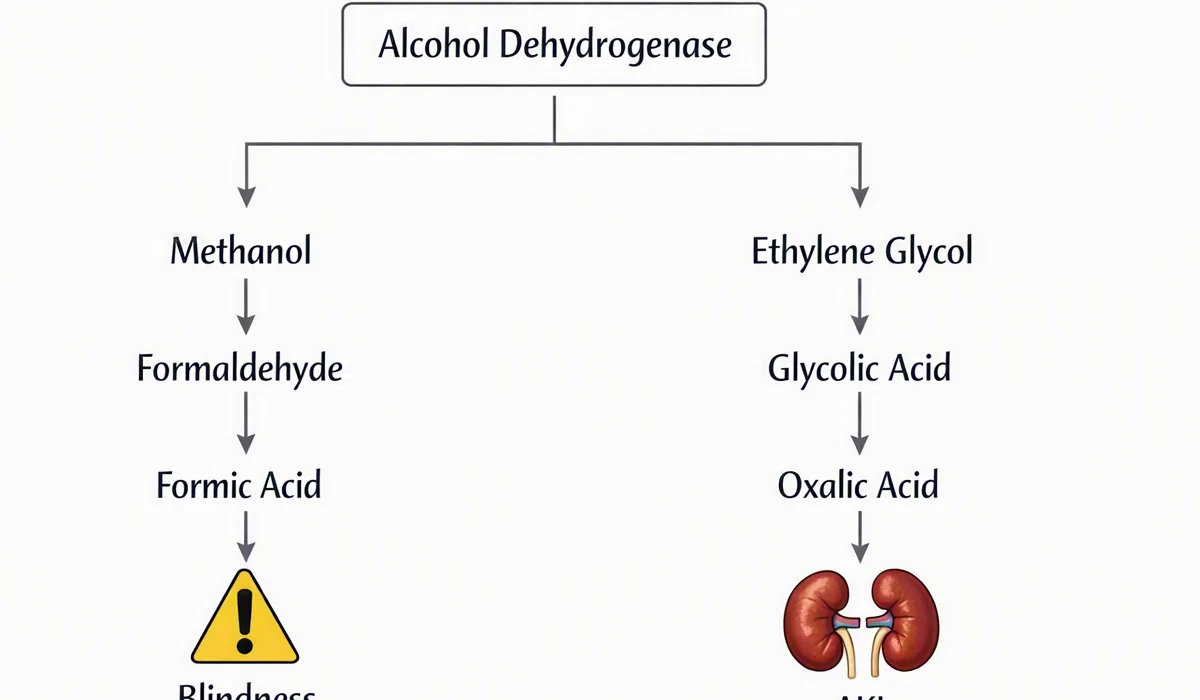
An elevated anion gap often indicates a buildup of unmeasured acids or remaining unmeasured anions. The most common causes include lactic acidosis, ketoacidosis, renal failure, and toxic alcohols. Each of these conditions shifts the chemistry of the blood in a different way, but all can raise the gap by adding acid or reducing acid clearance.
Lactic acidosis occurs when lactate accumulates faster than it can be metabolized. It may appear in shock, severe infection, hypoperfusion, or other states of metabolic stress. Ketoacidosis is associated with ketone body accumulation, often from insulin deficiency, fasting, or alcohol-related metabolic states. Renal failure can raise the gap because the kidneys cannot excrete acid efficiently, allowing sulfate, phosphate, and other acids to accumulate. Toxic alcohols may produce both direct toxicity and acid generation, creating a dangerous metabolic picture.
These conditions may each produce a form of high anion gap metabolic acidosis, but the calculator does not identify the cause by itself. It serves to flag the pattern. Once the pattern is recognized, the clinician can focus the workup on the most likely diagnosis. In other words, the anion gap is a clue, not the final answer.
Abnormal results should always be checked against the patient’s symptoms and the rest of the electrolyte imbalance. A sudden change in bicarbonate or gap may indicate acute illness, medication effects, or sample issues. This is where careful laboratory analysis and bedside reasoning come together.
How Albumin Affects the Anion Gap
Albumin is a principal negatively charged protein in serum and a important contributor to the usual anion gap. When albumin is low, the measured anion gap can appear deceptively normal even if acids are present. This is why hypoalbuminemia is such an important confounder.
In the setting of low albumin, clinicians often use an albumin-adjusted or albumin-corrected anion gap so the calculation more closely matches the true acid burden. The principle of albumin correction is easy to understand: when albumin falls, the gap tends to fall too, because the body loses one of its main unmeasured anions. Correcting for albumin can reveal hidden unmeasured acids that would otherwise be missed.
This matters most when a patient has a complex presentation. For example, someone with infection, poor nutrition, liver disease, or fluid overload may have hypoalbuminemia and an elevated acid load at the same time. If the gap is not corrected, the clinician may miss the degree of metabolic disturbance.
For this reason, many clinicians consider albumin as part of the same interpretive pathway as bicarbonate. A low albumin can hide a significant acid-base problem, and corrected bicarbonate plus albumin-corrected anion gap provides a more accurate picture of the patient’s acid-base balance.
Boundaries of the Calculator
Despite being a well-designed anion gap calculator has important drawbacks. The first is lab variability. Different analyzers, varied assay methods, and changing sample conditions can produce slightly different results. That means the same patient may appear to have a different gap depending on the laboratory. The reference interval should always come from the reporting lab, not from a generic assumption.
Measurement error is an additional concern. Subtle changes in sodium, chloride, or bicarbonate can alter the calculated gap, especially when values sit near the border of normal. If the numbers do not fit the clinical picture, repeat testing may be needed. Preanalytic issues such as delayed processing, contamination, or specimen handling can also affect results.
The biggest limitation, however, is that the calculator cannot replace clinical context. A number alone cannot determine whether the patient has a mixed disorder, a compensation pattern, or a transient lab shift. Good interpretation requires symptoms, vital signs, medication review, kidney function, lactate, ketones, and sometimes arterial or venous blood gas data.
Another limitation is that corrected bicarbonate formulas are not universally standardized. Different methods may estimate compensation differently, and the best approach may vary by institution. That is why the output should be treated as a support tool for acid-base interpretation, not an absolute verdict. The calculator improves workflow, but it cannot replace thoughtful review of the full case.
Common Questions About Corrected Bicarbonate and Anion Gap
What is the anion gap calculator used for?
An anion gap calculator is used to quickly compute the difference between measured serum cations and anions from an electrolyte panel. It helps spot possible metabolic acidosis, find unmeasured anions, and support broader acid-base interpretation. When combined with corrected bicarbonate and albumin data, it becomes more useful for identifying hidden metabolic problems.
How is corrected bicarbonate?
Corrected bicarbonate is determined by evaluating the measured serum bicarbonate in relation to the patient’s acid-base status and, when needed, modifying for factors such as albumin and compensation. The exact corrected bicarbonate formula can change by method, but the goal is always the same: figure out whether the low bicarbonate reflects true metabolic loss or a compensatory change. It is best used with the anion gap and other laboratory values.
How does albumin affect the anion gap?
Albumin is a negatively charged protein and a key unmeasured anion in serum. When hypoalbuminemia is present, the anion gap may be decreased than expected even if acidic compounds are increasing. That is why albumin correction or an albumin-corrected anion gap can reveal a more reliable view of the overall acidity.
What does a high anion gap mean?
A high anion gap often suggests that additional acids are present in the blood, which increases the number of unmeasured anions. Frequent causes include lactic acidosis, ketoacidosis, renal failure, and toxic alcohols. This pattern commonly suggests high anion gap metabolic acidosis, though the exact cause still calls for clinical evaluation.
Can a normal anion gap still indicate acidosis?
Absolutely. A normal anion gap can still be present with acid buildup, especially in normal anion gap acidosis where bicarbonate is lost and chloride goes up in response. In that case, the gap stays within the expected range even though the patient has an acid-base imbalance. That is why, corrected bicarbonate and the overall acid-base status must be considered together.