How the Anion Gap Is Measured
The anion gap is a practical way to look at the relationship between the primary ions in blood. It is derived from serum electrolytes and helps estimate the difference between measured cations and measured anions. In practice, the most common values used are sodium, chloride, and bicarbonate, with potassium sometimes included depending on the formula. This simple calculation can highlight valuable clues about acid-base balance and broader blood chemistry patterns.
Clinically, the anion gap is a diagnostic tool that supports laboratory interpretation of acid base disorders. It does not diagnose a disease by itself, but it helps a healthcare provider focus the possibilities during a metabolic acidosis workup. A change in the gap AG vs osmolar gap diagnostic value often indicates unmeasured ions in the bloodstream, which may signal hidden acids or other biochemical shifts.
Because the result is based on routine lab values, the anion gap is easy to obtain from an electrolyte panel. That makes it a valuable part of clinical assessment and a fast way to screen for electrolyte imbalance. Used correctly, it can improve diagnostic accuracy and support better clinical decision making.
Using an Anion Gap Calculator with Albumin Level Input
An anion gap calculator with an albumin value is designed to do more than just calculate the anion gap. It also helps correct for albumin, which is useful because low albumin can make the measured result look normal even when an acid problem is present. This is why calculator-style tools that include albumin level are more useful clinically than a basic formula alone.
To use this type of tool, provide the available input fields from the electrolyte panel, usually sodium, chloride, bicarbonate, and sometimes potassium. Then add the serum albumin value. The calculator uses these lab values to generate both the raw anion gap and the corrected anion gap. That correction can alter the interpretation substantially, especially when the patient has hypoalbuminemia.
The main goal is laboratory interpretation that shows the true physiologic picture. A result that appears normal on first review may become abnormal after albumin correction. That is why the anion gap calculator is more than a convenience tool; it is a diagnostic tool that enhances clinical assessment by adjusting for a common source of error in blood chemistry.
Helpful tip: if the lab report includes sodium, chloride, bicarbonate, and albumin, you already have the core data needed to evaluate the anion gap more accurately.Anion Gap Formula and Albumin Correction
The classic anion gap formula can be written as:
Anion gap = sodium - (chloride + bicarbonate)
Some clinicians add potassium in the calculation, but many routine references omit it because potassium is present at a much lower concentration and usually modifies the result only slightly. Whether potassium is included depends on institutional practice and the specific calculator being used.
Correcting for albumin is the following step when interpreting the result. Because albumin carries negative charge, lower albumin decreases the measured gap. A common approach is to use a correction for each decrease in albumin from the expected level. This is the essence of albumin correction: it estimates what the gap would have been if serum albumin were normal.
In an albumin adjusted interpretation, a low albumin may mask excess acids. The corrected value gives a better estimate of whether there are extra unmeasured ions in the circulation. That is especially useful helpful when reviewing blood chemistry in complex illness, where the uncorrected result may not fit the patient’s condition.
From a clinical standpoint, the formula and correction together help place the number with the broader acid-base balance. They are part of a more complete interpretation guide for metabolic conditions and are most valuable when used with the full picture rather than in isolation.
Typical and Unexpected Anion Gap Values
The reference range for the anion gap depends on the lab procedure and whether potassium is included. As a result, a clinician should always compare the result with the local standard range rather than using a single universal cutoff. Even a small shift in measurement methods can change the expected reference interval.
A high anion gap usually suggests the presence of additional acids or other undetected anions. This is commonly associated with anion gap metabolic acidosis. A low anion gap is less common, but it can also be clinically meaningful and may reflect laboratory issues, protein abnormalities, or unusual electrolyte patterns.
Because the result varies by method, the best approach is to interpret it in context. A normal value does not always rule out disease, and an abnormal value should not be treated as a standalone diagnosis. The number is most useful when combined with the rest of the electrolyte results, the patient’s symptoms, and the overall clinical picture.
In short, the anion gap is a clue, not a conclusion. The key is knowing when the value falls outside the expected expected interval and whether correction for albumin changes the meaning of that result.
Why Albumin Affects the Assessment
Hypoalbuminemia is a single of the key reasons to adjust the anion gap. Albumin is a negative-charged protein, so it has a strong effect to the body’s normal electrical balance. When albumin falls, the measured gap may fall too, even if the patient has clinically important acidosis.
This happens because albumin is part of the pool of negative substances that help maintain acid-base balance. If albumin decreases, the body adjusts by altering other ions and the measured gap can become misleadingly low or normal. A corrected calculation helps restore a more accurate picture of the underlying chemistry.
Another reason albumin matters is that it helps account for unmeasured anions. When serum albumin is low, fewer negative charges are present in the measured system, so the gap does not reflect the full burden of acids. That can hide important metabolic acidosis and delay recognition of the underlying disorder.
For this reason, an albumin-aware anion gap calculator is better suited for real-world clinical decision making. It increases confidence in the interpretation and helps distinguish true metabolic problems from changes caused by protein levels alone.
Typical Causes of a Elevated Anion Gap
A elevated anion gap metabolic acidosis occurs when the body builds up acids that are not directly measured on a basic electrolyte panel. These acids increase the gap because they replace bicarbonate and contribute additional negative charge from hidden anions.
A leading cause is lactic acidosis, which can develop when tissues do not receive enough oxygen or when metabolism is impaired. Another frequent cause is ketone-related acidosis, seen when ketone bodies build up in the blood. Either condition can produce a markedly elevated gap and require prompt evaluation.
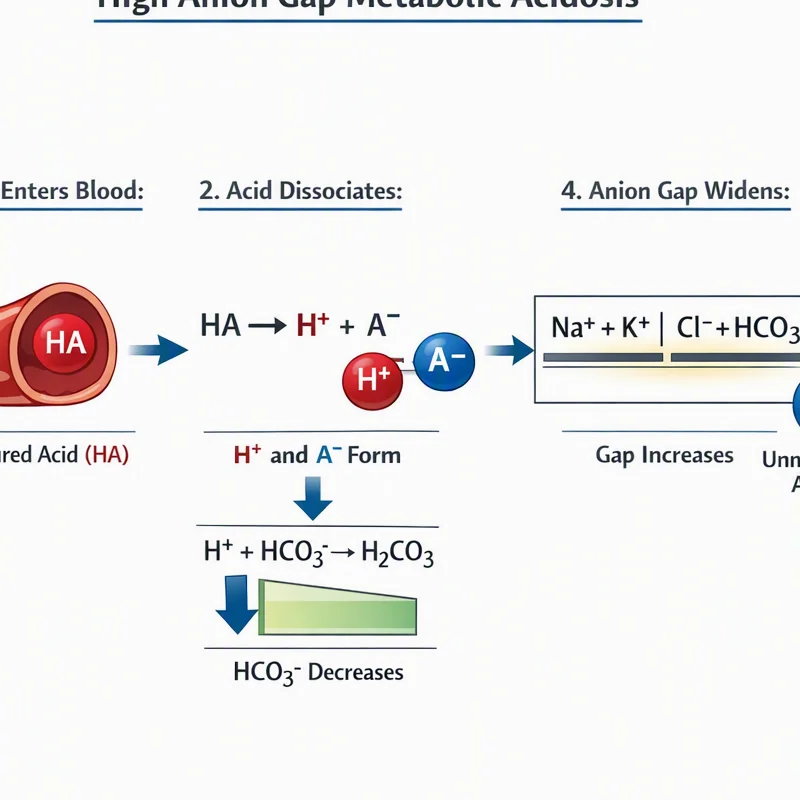
Kidney failure is another key cause because the kidneys normally excrete acids. When kidney function declines, acid retention can lead to an increased gap and worsening metabolic acidosis. In each of these situations, the anion gap offers a quick indication that something is wrong in the body’s handling of acid.
Other causes can include toxic ingestions and less common metabolic conditions, but the main point is the same: an elevated gap signals excess acid or unmeasured negative ions. That is why the result is such a important part of the metabolic acidosis workup.
Typical Causes of a Low Anion Gap
A reduced anion gap is rarer than a high one, but it should not be overlooked. The most common explanation is lab error, so repeating the test is often a practical first step. Specimen problems, calibration problems, or reporting mistakes can all produce misleading results.
Another important cause is multiple myeloma. In this condition, abnormal proteins can alter the charge balance in blood and reduce the measured gap. Because these proteins may behave like cations, they can change the expected relationship between the measured ions.
Marked increases in certain cations can also lower the gap. Hypercalcemia and hypermagnesemia may result in a reduced result by shifting the balance of charged particles. Although these are less frequent explanations, they are clinically important when the low gap is persistent and the rest of the evaluation suggests a real physiologic change.
A low result may also be related to hypoalbuminemia, which is an important reason albumin correction is so useful. Without that adjustment, a patient may appear to have a low or normal gap despite significant underlying acid-base problems.
Clinical Interpretation and Follow-up Steps
The most effective way to interpret the result is to place it in clinical context. This value should be checked alongside complaints, history, drugs, and the complete electrolyte panel. If the corrected value suggests acidosis, the next step is to determine the cause and judge severity.
An effective secondary tool is the delta gap, which measures the rise in anion gap to the fall in bicarbonate. This helps determine whether the patient has only a increased-gap acidosis or a combined disorder. The delta gap can reveal other acid-base disturbances that are not apparent from a single number.
An arterial blood gas may also be required to determine the kind and extent of the acid-base imbalance. It can reveal the pH, breathing compensation, and whether the patient has a mixed process. In combination with the anion gap and albumin-adjusted interpretation, it provides a much more complete view of the physiology.
When the outcome is unusual, rerun testing and review the blood chemistry for consistency. If the pattern remains irregular, the clinician should consider further evaluation for kidney dysfunction, lactic acidosis, ketoacidosis, toxic exposure, protein disorders, or other causes of electrolyte imbalance. The aim is not just to determine the number, but to apply it as part of a systematic diagnostic pathway.
In day-to-day care, the most useful method is easy: calculate the anion gap, adjust for albumin, measure against the reference range, and then evaluate it with the patient’s general condition. That process improves diagnostic accuracy and supports better clinical decisions.
Common Questions
How do you calculate anion gap with albumin level input?
Commence with the usual anion gap formula: sodium less the sum of chloride and bicarbonate. After that input the albumin level into anion gap calculator so it can apply albumin correction. The result is the adjusted anion gap, which offers a more precise interpretation when serum albumin is low.
Why does the low albumin affect the anion gap?
Reduced albumin decreases the number of negative proteins in the blood, which alters acid-base balance and reduces the measured gap. As albumin is one of the principal unmeasured anions, hypoalbuminemia can conceal a real high-gap problem unless albumin correction is applied.
What is a normal anion gap after albumin correction?
The normal anion gap after correction depends on the lab’s reference range and whether potassium is included in the formula. A corrected result should be compared with the local reference interval rather than a single universal number. The key is whether the corrected value falls within the expected normal range for that laboratory.
Which conditions cause a high anion gap?
Common causes of high anion gap metabolic acidosis include lactic acidosis, ketoacidosis, and renal failure. These conditions increase unmeasured anions in the blood and lower bicarbonate. Other causes may also exist, so the result should always be interpreted with clinical context and the full electrolyte panel.
When should an anion gap result be confirmed with additional testing?
Additional testing is appropriate when the result is unexpected, when lab error is possible, or when the patient has signs of metabolic acidosis. An arterial blood gas, repeat electrolyte panel, and review of albumin can help confirm the finding. Further testing is also warranted if the corrected anion gap suggests a significant acid-base disorder.