An Anion Gap Calculator is a practical tool for interpreting an anion gap value on a metabolic panel. It helps turning common laboratory values into a helpful diagnostic clue for evaluating acid-base balance, especially when a clinician is reviewing an electrolyte panel for signs of metabolic acidosis or related acid-base disorder patterns.
When used properly, the calculator does far more than give a number. It helps connect serum sodium, serum chloride, and serum bicarbonate to the broader picture of metabolic panel interpretation. That means it can support recognition of a high anion gap, a low anion gap, or results that need follow-up with additional testing.
Explaining the Anion Gap Shows
The anion gap is an estimate of the imbalance between measured positively charged and negative electrolytes in the blood. In routine practice, it mainly describes the relationship between sodium, chloride, and bicarbonate. Because not all ions are directly measured, the anion gap provides an indirect view at the presence of unmeasured ions and unmeasured anions.
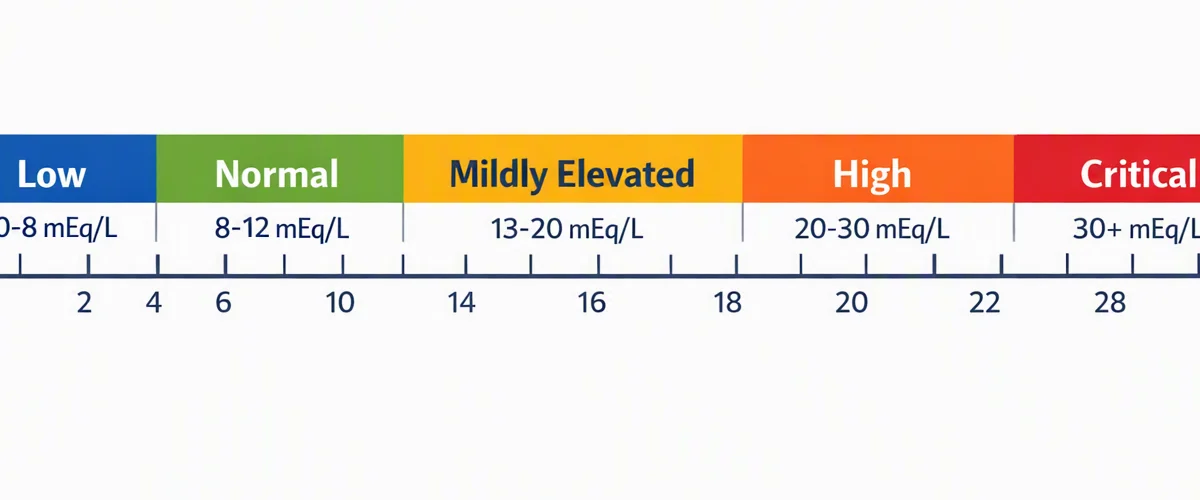
In simple terms, the anion gap helps reveal whether something is affecting acid-base balance. A normal result suggests that the measured cations and anions are in expected proportion, while an abnormal result may point to an underlying acid-base disorder. This is why the anion gap is a standard part of metabolic panel interpretation in many situations.
Although the number is derived from routine chemistry tests, its clinical significance is much more extensive than the formula itself. A change in the anion gap can be a diagnostic clue that prompts a more detailed metabolic acidosis evaluation, review of medications, or follow-up testing such as a blood gas.
How to Calculate the Anion Gap
An Anion Gap Calculator helps you to calculate anion gap from results on a basic metabolic panel or comprehensive metabolic panel. The most commonly used anion gap formula is:
Anion gap = Sodium - (Chloride + Bicarbonate)
Some labs may use small variations of formulas, especially if potassium is included. Still, the sodium-based version is the standard in everyday interpretation.
To use the calculator, enter the patient’s serum sodium, serum chloride, and serum bicarbonate. The result estimates the gap between measured cations and anions. If the number is higher than expected, it may indicate an increased amount of unmeasured anions. If it is lower than expected, the result may reflect low albumin, lab variation, or another less common cause.
The calculator is especially helpful when reviewing a electrolyte panel rapidly. For example, a low bicarbonate with normal chloride may suggest metabolic acidosis, while a low bicarbonate with a markedly elevated anion gap suggests a high gap acidosis.
It is important to remember that the calculator is only one step in clinical reasoning. It assists, but does not replace, a full assessment of symptoms, history, medications, and the rest of the lab pattern.
Typical Anion Gap Intervals and Factors That Affect Them
The usual range for the anion gap depends on the assay method and the lab’s reference interval or lab interval. Because different laboratories measure ions differently, a result that is “normal” in one setting may anion gap in chronic kidney disease sit slightly outside the range used elsewhere.
This variation is one reason clinicians should always interpret the number in context rather than relying on a single cutoff. The lab’s stated reference interval is the most useful guide for that specific result.
Albumin has a major effect on the anion gap because it is a negatively charged protein low anion gap explanation and contributes substantially to the pool of unmeasured anions. When albumin is low, the anion gap may appear falsely reduced even if an acid-base problem is present. This is where correction for albumin becomes important.
An corrected-for-albumin or anion gap corrected for albumin estimate adjusts for reduced albumin so the result better reflects the true acid-base picture. In practical terms, if albumin is low, the corrected value may reveal a hidden elevation that would otherwise be missed. This helps reduce the risk of a falsely low anion gap.
Albumin correction is especially helpful when the patient has illness, inflammation, malnutrition, liver disease, or fluid overload—situations where albumin may be below the usual range. In those cases, the raw result may not fully represent the patient’s actual acid-base status.
High Anion Gap Acidosis Reasons
A elevated anion gap is commonly associated with metabolic acidosis. This takes place when acids build up in the blood and raise the amount of unmeasured negative ions. The bicarbonate level frequently falls because it is being used to buffer acid, and the anion gap increases as a result.
Typical causes of elevated anion gap include:
- Lactate buildup, which can occur when tissues are underperfused or under marked metabolic strain Ketone-related acidosis, including diabetic or alcoholic forms Kidney failure, where the kidneys cannot eliminate acid effectively Exposure to certain toxins or drugs that generate or retain acids
Lactic acidosis is a well-known cause of increased gap results and frequently signals tissue hypoxia, sepsis, or other conditions that reduce oxygen delivery or utilization. Ketoacidosis typically appears with increased ketones and may be seen in diabetes, prolonged fasting, or heavy alcohol use. Kidney failure plays a role by reducing acid excretion and allowing acid metabolites to build up.
When the calculator returns a higher number, the next step is not just to label it unusual. The key is to connect it to the patient’s overall clinical picture. For example, a low bicarbonate with a high anion gap strongly supports a high gap acidosis pattern, but the exact cause still requires focused evaluation.
In many cases, the anion gap is a useful starting point for a structured workup. Depending on the context, that may include lactate, ketones, creatinine, toxicology testing, and a blood gas to assess pH and compensation.
Reduced Anion Gap Origins and Clinical Relevance
A reduced anion gap is less common than a high one, but it can be medically significant. The most common explanation is low albumin, since albumin is a primary unmeasured anion. When albumin decreases, the measured gap may decline even if the patient’s acid-base status is otherwise unchanged.
Additional notable causes include multiple myeloma, lithium exposure, and paraproteinemia. These conditions can reduce the calculated gap by bringing in positively charged proteins or cations into the system, changing the balance of measurable ions.
Multiple myeloma and other paraproteinemia states can generate abnormal proteins that influence the result. This is why an unexpectedly low number should not be ignored automatically. It can be a clue to a larger diagnostic process, especially if the patient also has anemia, kidney dysfunction, bone pain, or elevated total protein.
Lithium is an additional notable cause because it is a cation that can affect the calculation. In the right clinical setting, a low anion gap may provide an earliest warning sign of lithium effect or toxicity.
As with a high result, a low value requires interpretation. A low gap may be due to true disease, but it can also reflect a measurement issue or a misleading result from low albumin. Correcting for albumin and reviewing the full chemistry panel improves interpretation.
How to Understand Results from a Metabolic Panel
Good interpretation of metabolic panels begins with the overall picture, not the number alone. The anion gap should be interpreted alongside acid-base balance, sodium, chloride, bicarbonate, and the patient’s overall condition. A thorough interpretation often reveals whether the problem is an electrolyte disturbance, an acid accumulation state, or a mix of both.
For example, a low bicarbonate with elevated chloride may point to a normal-gap acidosis with a chloride change. In that scenario, the body may be exchanging bicarbonate loss for chloride gain, keeping the anion gap within range even though acidosis is present. By contrast, low bicarbonate with a high anion gap points more toward acid accumulation from causes such as lactic acidosis, ketoacidosis, or renal failure.
The chloride change is significant because chloride often rises as bicarbonate falls in certain forms of acidosis. That means a patient can have clear acid-base disruption even when the anion gap is not elevated. This is why the calculator should be used as part of a broader review of the entire electrolyte panel.
One helpful approach is to interpret results in this order:
- Assess sodium, chloride, and bicarbonate for obvious abnormalities Use the Anion Gap Calculator to spot a high or low pattern Consider whether albumin may require correction Match the pattern with likely causes and symptoms Judge whether additional testing, including a blood gas, is needed
This method improves the chance of identifying the correct acid-base abnormality and makes the result more useful than a standalone calculation. The anion gap is best viewed as a useful bridge between raw lab results and a diagnosis that explains what is happening physiologically.
Limitations, Pitfalls, and When to Retest
Despite this a correctly used calculator has limitations. One common issue is laboratory error. A specimen problem, sample contamination, or analyzer issue can produce a misleading value. When the number does not fit the clinical picture, a repeat test is often the right next step.
Another pitfall is failure to account for hidden anions or protein-related effects. If albumin is low, the raw number may underestimate the severity of the underlying disturbance. If a patient has abnormal proteins or unusual cation exposure, the result may be shifted in the opposite direction.
A blood gas test can be useful when the chemistry panel and symptoms do not align. It provides pH and respiratory compensation data, which can clarify whether the issue is truly metabolic, respiratory, or mixed. In patients with severe illness, the blood gas may also help confirm the urgency of the finding.
Review again the result when:
- The result conflicts with the patient’s condition There may have been sample mishandling Albumin levels are off and correction has not been applied There is concern for a hidden acid-base problem Treatment is underway and response needs confirmation
In short, the calculator is helpful, but it should not be treated as the final answer. A careful recheck can prevent misclassification and help distinguish a true abnormality from a transient or artifactual finding.
Common Questions
What is an Anion Gap Calculator used for?
An Anion Gap Calculator is used to help interpret a metabolic panel by estimating the difference between measured electrolytes and identifying possible acid-base abnormalities. It is especially helpful for spotting a elevated anion gap or reduced anion gap pattern and for guiding next-step clinical reasoning.
How do you calculate the anion gap from a metabolic panel?
The standard anion gap formula is sodium - (chloride + bicarbonate). This calculation uses values from a BMP or CMP. Many clinicians use a calculator to make this faster and reduce arithmetic errors.
What is a normal anion gap range?
The normal reference range varies by testing facility because various analyzers and testing methods can alter the result. This is why you should use the lab’s stated usual range or reference interval rather than assuming one single cutoff.
Why would the anion gap be high or low?
A elevated anion gap often reflects acid-base disturbance from causes such as lactate buildup, ketoacidosis, or renal insufficiency. A low anion gap is often linked to low albumin, but it can also occur with multiple myeloma, lithium, or paraprotein excess.
Do you need albumin correction when interpreting the anion gap?
Yes, it should, when blood albumin is low, albumin adjustment can refine interpretation and uncover a more accurate albumin-adjusted anion gap. This matters because reduced albumin can make the gap look lower than it really is, leading to a misleadingly low anion gap and a missed diagnostic clue.